

KAFFA FRESCO whole bean coffee

Washed Arabica
and how to roast it

The taste of natural coffee is formed gradually: growing altitude, soil, climate, cherry ripeness, harvesting method, washed processing and roast profile all shape the character of the bean step by step. In high-grown Colombian Arabica, this journey is especially clear — clean, bright and deep.

Growing altitude

The altitude where
the bean’s character matures

For Arabica, altitude is more than geography. The cooler and higher the plantations are, the more slowly the coffee cherry ripens, the denser the bean becomes, and the cleaner, brighter and more complex the taste reveals itself in the cup.

1500–2100 m
1200–1500 m
900–1200 m
up to 900 m

1500–2100 m

High-grown Arabica

This is where the bean reveals its most expressive profile: higher density, finer acidity, deeper aroma and a more complex taste structure.

1200–1500 m

Mountain zone

Ripening becomes slower, the bean grows denser, and the taste gains more clarity, brightness and subtle nuances.

900–1200 m

Medium altitude

The bean develops a smoother and more straightforward profile: soft sweetness, moderate acidity and a calmer aromatic expression.

Up to 900 m

Low altitude

The cherry ripens faster, so the taste is usually simpler and less layered.

Washed processing

Clarity of taste
begins after harvesting

Washed processing is a method in which the bean is separated from the pulp, fermented, thoroughly washed and dried. This method makes the profile cleaner, more precise and more transparent, allowing the altitude, variety and character of the Arabica itself to come through more clearly.

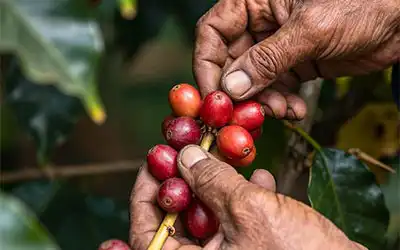
Harvesting coffee cherries
01
First stage

Cherry harvesting

Ripeness is especially important for washed processing: ripe cherries are selected, already rich in sugar, density and aromatic potential.

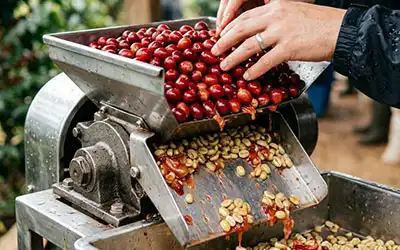
Pulp removal
02
Right after harvesting

Pulp removal

The cherry is depulped: the sweet pulp is removed, while the bean remains in mucilage, which influences the formation of taste.

Fermentation
03
Taste control

Fermentation

At this stage, the bean is freed from the sticky layer. Controlled fermentation helps preserve taste precision and prevents the profile from becoming unnecessarily heavy.

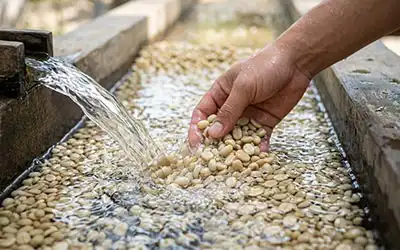
Washing the coffee beans
04
Cup clarity

Washing

The beans are thoroughly washed with water. This is where the transparency appears that washed coffee is valued for by those who appreciate a clean and clear cup.

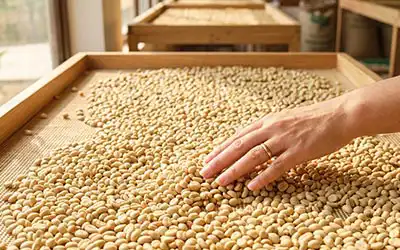
Coffee drying
05
Final stage

Drying

After washing, the beans are dried to a stable moisture level. This fixes the result of processing and prepares the raw coffee for careful, precise roasting.

What washed processing gives

Why the taste is cleaner

Washed processing does not hide the bean’s character behind heavy fruity sweetness. It makes the taste more coherent and clear, while the nuances of altitude, variety and roasting become easier to read.

a cleaner and more transparent cup

acidity and structure are easier to read

variety and terroir show more clearly

less unnecessary heaviness and muddiness in the taste

For high-grown Colombian Arabica, washed processing is especially important: it does not mask the bean’s natural character — instead, it highlights its clarity, brightness and precision.

Roasting and profile

What happens to the bean
during roasting

Roasting is the moment when the bean’s potential taste becomes the taste of the cup. As temperature rises, sweetness, acidity, body density and the aromatic profile all change. The goal is not simply to make the bean darker, but to bring it precisely to the desired profile.

01 / start of reaction

Moisture evaporates

At the beginning, the bean warms up and loses internal moisture. This is a preparatory stage: the structure becomes more stable, and the future taste becomes cleaner and smoother.

02 / sweetness development

Sugars caramelize

At this stage, more sweetness, nutty and caramel nuances appear. Acidity becomes softer, while the profile becomes more coherent and rounded.

Roast scale

Roast
levels

From the lightest and most acidic to the darkest and densest.

Light
Medium
Medium-dark
Dark
Light delicate

03 / body formation

Taste density grows

The further the roast develops, the richer and denser the body of the drink becomes. The cup gains more depth and fullness of taste.

04 / final balance

Aroma opens up

The final profile determines what comes forward: fruity freshness, chocolate-nut sweetness, spices or deeper dark notes.

Light delicate

The gentlest and most subtle roast level.

Light

A light roast with the bean’s bright character.

Medium

A balanced roast for everyday coffee.

Medium-dark

A deeper roast with a dense body.

Dark

An intense roast for a rich cup.

KAFFA FRESCO whole bean coffee line

Three profiles
Three cup characters

One logic of origin — and three different taste accents. Below is the KAFFA FRESCO coffee line: from a berry-bright profile to a denser, deeper and more chocolate-forward cup.

KAFFA Caturra

Caturra

83.4 Q-grade
system
Region
Caldas
Growing altitude
From 1600 m
Processing
Washed
Roast
Medium

Premium Colombian Arabica from the Caldas region. In the cup — bright blackcurrant notes, the sweetness of red apple and a light cocoa-like astringency.

Taste profile

Blackcurrant
Red apple
Cocoa

Selected
Learn more

KAFFA Supremo

Supremo

84.7 Q-grade
system
Region
Tolima
Growing altitude
From 1700 m
Processing
Washed
Roast
Medium

Specialty Colombian Arabica from the Tolima region. Bright citrus acidity and the freshness of ripe cherry come together with a light almond-like astringency.

Taste profile

Ripe cherry
Citrus
Almond

Specialty
Learn more
KAFFA Espresso

Espresso

82.8 Q-grade
system
Region
Risaralda
Growing altitude
From 1500 m
Processing
Washed
Roast
Medium

Premium Colombian Arabica from the Risaralda region. A denser and more expressive profile with notes of dried fruit, nuts and dark chocolate.

Taste profile

Dried fruit
Nuts
Dark chocolate

Selected
Learn more